

How to Build a Welcome Email Sequence

Learn how to create an effective welcome email sequence that delivers on signup promises, personalizes content, times messages by subscriber needs, and guides contacts to the right next step.

How to Build a Welcome Email Sequence
Brandset TeamBrandset Team13 min de leitura

A welcome email sequence should do more than confirm that someone joined your list. It should deliver whatever was promised at signup, establish what future emails will be useful for, learn enough about the subscriber to improve later communication, and give them a sensible next step.

For many small businesses, that can happen in three to five emails. The exact number matters less than the order of the conversation. Someone who requested a checklist should receive the checklist before a sales pitch. Someone who joined because of a discount has already shown more commercial intent and can reasonably see an offer sooner.

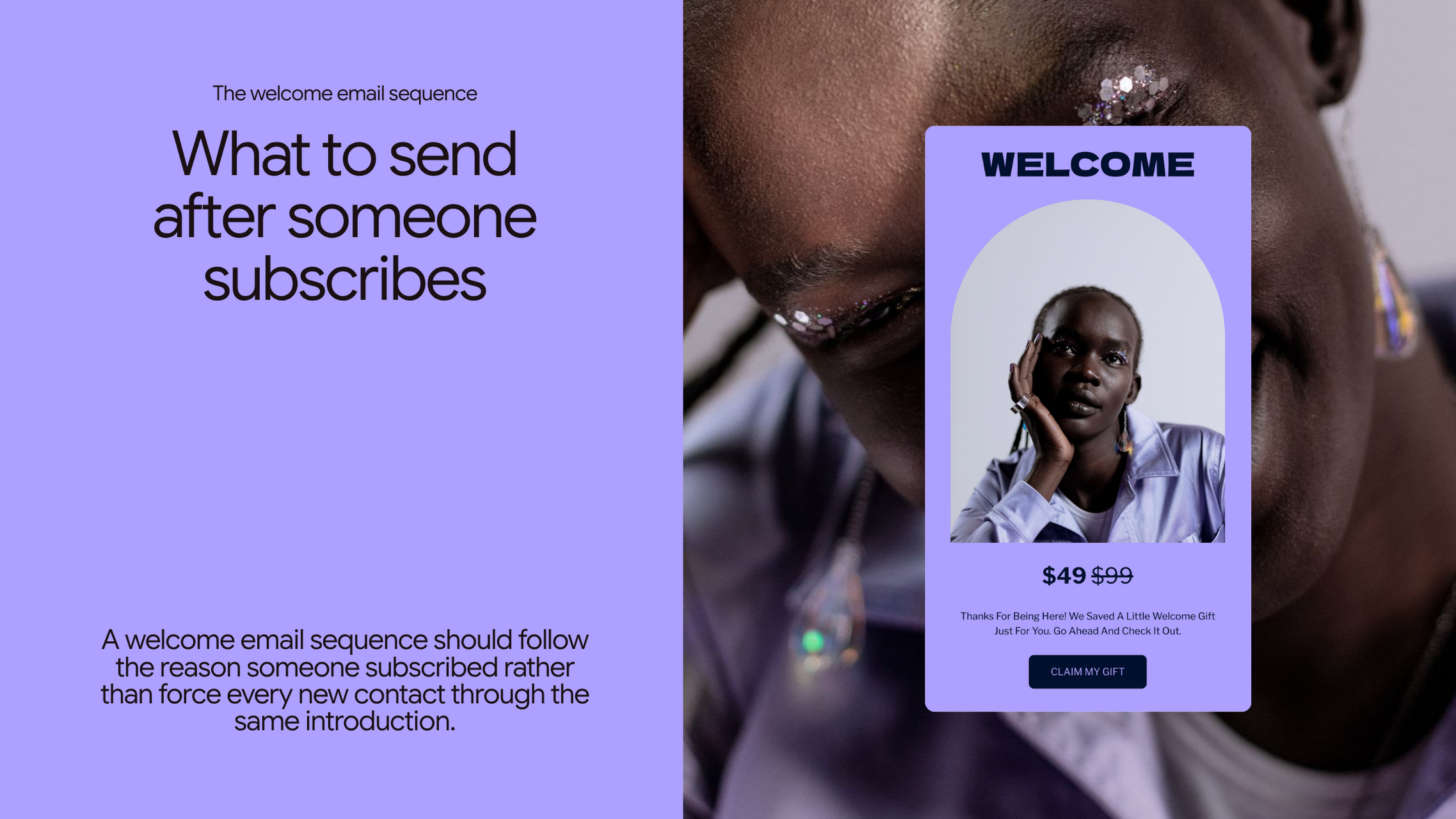
The welcome sequence works best when it follows the reason the person subscribed rather than forcing every new contact through the same generic company introduction.

What a welcome email sequence should accomplish

A welcome sequence is an automated series that begins after a defined signup or opt-in event, such as joining a newsletter, requesting a resource, registering for updates, or submitting a relevant form. Unlike a regular newsletter sent on a calendar schedule, each subscriber begins the sequence according to when they joined.

A useful sequence usually needs to answer a handful of practical questions for the subscriber:

Did I get what I asked for?
If a resource, discount, confirmation, or registration detail was promised, deliver it.

What should I expect from this business now?
Set a realistic expectation for the type and frequency of communication.

Is staying subscribed worth it?
Give the reader something useful before asking for too much attention.

Does this business understand what I am interested in?
Use signup source, preferences, or meaningful behavior to improve relevance.

What is the next reasonable step?
That might be reading another resource, replying, requesting an estimate, booking a consultation, starting a trial, or simply continuing to receive the newsletter.

A company biography rarely answers any of these questions, which is why welcome sequences built around “our story,” “our values,” and “meet the team” often waste the period when the subscriber has the most immediate context for why they joined.

A practical five-email welcome sequence

Five emails make a useful framework because each can have a distinct job. It is not a quota. A local service business may need three. An event registration might need a confirmation and one reminder. A longer educational program may reasonably require more.

Email 1: Deliver what was promised

Send the first email as soon as the signup requires an immediate response.

If someone requested a guide, send the guide. If they joined a waitlist, confirm that they are on it. If they subscribed to a newsletter, explain what they will receive and when.

A bookkeeping firm offering a Year-End Bookkeeping Checklist might write:

Here’s the checklist you requested. It covers the records worth organizing before year-end so you can spot missing documents before they become a January problem.

I’ll also send a few short follow-ups over the next week covering the issues we see most often when small businesses prepare their books.

The subscriber knows the form worked, receives the promised resource, and understands why another email may arrive.

There is no need to add the firm's entire service menu, founder story, five testimonials, and three unrelated calls to action.

An immediate commercial CTA can still make sense when the signup itself was commercial. A fitness studio offering “Get your first class for $10” does not need to pretend the person joined for educational content. The first email can deliver the offer and explain how to book.

The signup promise sets the tone.

Email 2: Give the subscriber a reason to keep reading

The second message should prove that the email relationship has value beyond confirmation.

Keep the topic narrow. Solve one problem, explain one useful idea, or help the reader avoid one common mistake connected to what they signed up for.

For the bookkeeping firm, that could be:

Three transactions small businesses commonly categorize incorrectly before year-end

For an HVAC contractor whose subscriber requested a seasonal maintenance guide:

What a rising summer electric bill can tell you before you replace your AC

For a dental practice:

What to ask before comparing implant financing options

The purpose is not to write a complete guide inside the inbox. Give the reader enough useful information that future messages feel connected to the reason they subscribed.

Email 3: Learn something useful about the subscriber

By the third email, many businesses have enough context to ask a simple preference question.

A home-services company that handles HVAC, plumbing, and electrical work could ask:

What are you most likely to need help with this year?

The links could be:

  • Heating & cooling

  • Plumbing

  • Electrical

  • General home maintenance

A small marketing firm might ask whether the subscriber is more interested in email, websites, SEO, or automation.

This only helps when the answer changes something later. If every click leads to the same campaigns forever, collecting the preference creates data without improving the customer experience.

Useful subscriber information can come from the original form too. Someone who downloaded an AC Replacement Cost Guide has already told you something about their interest. You may not need another email asking them to repeat it.

Email 4: Connect the problem to what you sell

By this point, the subscriber has received what they requested and at least one useful follow-up. Introducing the business's product or service is natural when it relates directly to the problem being discussed.

For an accounting firm, that transition might look like:

If year-end cleanup keeps exposing the same bookkeeping problems, the issue may be the monthly process rather than January preparation. Our monthly bookkeeping service is designed for businesses that want the records reconciled throughout the year instead of rebuilding them at tax time.

That tells the reader what the service is for and why it exists.

A weak version would be:

Our comprehensive bookkeeping solutions help businesses save time and grow.

The first explains a mechanism. The second could describe almost any accounting firm.

A welcome sequence does not have to hide commercial intent. The offer simply needs enough context to make sense.

Email 5: Give the subscriber a clear next step

The final message should move the subscriber out of the welcome phase.

For a consultant, that might mean booking an introductory call.

For a real estate team, it might be requesting a home valuation or setting up a property search.

For a fitness studio, it might be booking the first class.

For a newsletter, the next step may simply be moving into the regular publishing cadence.

The CTA should reflect the level of commitment already shown. Someone who joined a general educational newsletter may not be ready for a sales call after four emails. A person who requested pricing could be.

When the final email is complete, the welcome sequence should have a defined destination rather than continuing indefinitely.

The same framework changes by business

A five-email outline becomes more useful when it reflects the actual customer journey.

Business

Email 1

Middle of sequence

Natural next step

Accounting firm

Deliver tax or bookkeeping resource

Explain one financial process and identify service interest

Consultation

HVAC contractor

Deliver maintenance or replacement guide

Explain repair/replacement considerations

Estimate request

Dental practice

Confirm guide or treatment inquiry

Answer common treatment or financing questions

Consultation

Real estate team

Deliver buyer/seller resource

Learn market, property, or timing interest

Showing, valuation, or call

Fitness studio

Deliver trial offer or schedule

Help choose a class or program

Book first session

Small agency

Deliver marketing resource

Teach, learn service interest, explain approach

Project inquiry

The structure is similar because the communication problem is similar. The content should not be.

Timing should follow what the subscriber needs to do

“Send every two days” is an easy rule to configure and a poor universal rule.

The right delay depends on what happened before the email.

If someone registers for a webinar tomorrow, the confirmation should arrive immediately and any reminder needs to respect the event date.

If they download a detailed financial planning guide, giving them some time to read it before asking what they thought is reasonable.

A subscriber who requests a discount may be ready to shop immediately. A person joining a monthly thought-leadership newsletter does not require five emails in the next 48 hours.

A general small-business welcome sequence might run over roughly a week or two, but the useful question is simpler:

What does the subscriber need enough time to do before the next message becomes relevant?

Sometimes the answer is read. Sometimes it is book, browse, compare, activate, attend, or reply.

Use that action to inform timing.

Signup intent should influence when you sell

The subscriber's entry point tells you a great deal about what can reasonably happen next.

Someone requesting a demo, estimate, pricing guide, first-purchase discount, or consultation has already demonstrated commercial intent. Product or service information can appear early without violating the reason they subscribed.

An educational signup is different. If someone requests The Beginner's Guide to Email Marketing, immediately pushing an expensive consulting engagement can feel disconnected from the problem they were trying to solve.

Newsletter subscribers fall somewhere in between. They know they subscribed to communication from a business, so there is no need to hide the product for ten emails. The newsletter still needs to keep delivering the value described on the signup form.

Good welcome sequences match the commercial pace to the entry point instead of applying a universal “never sell in email one” or “sell immediately” rule.

Use subscriber behavior when it changes the next message

The sequence does not have to remain identical for everyone.

Suppose a real estate newsletter asks subscribers whether they are buying, selling, or simply following the local market. A seller who requests a valuation has moved into a different situation from someone reading neighborhood updates.

Likewise, a SaaS trial user and a newsletter subscriber should not receive the same onboarding merely because both are “new contacts.” The trial user already has access to the product. Their welcome emails should help them complete useful product actions rather than repeatedly explain what the company does.

Useful signals might include signup source, form choices, relevant clicks, consultation bookings, account activation, purchase status, or other customer information the business legitimately has available.

The sequence becomes more useful when those signals alter the content or destination rather than simply accumulating inside the CRM.

Define when someone should leave the sequence

One of the easiest automation mistakes is allowing the welcome series to continue after it stops making sense.

Imagine a website consultant sends email two, the subscriber books a consultation the same afternoon, and a few days later receives:

Ready to see how we can help?

The automation is technically working. The customer experience is not.

A sequence can become obsolete when someone:

  • purchases;

  • books a consultation;

  • requests an estimate;

  • starts a trial;

  • becomes a customer;

  • enters another lifecycle workflow;

  • unsubscribes.

The appropriate exit depends on what the sequence was built to accomplish.

Lead magnets require similar care. Someone who downloads three different resources may need three delivery emails, but they usually do not need three identical welcome introductions. A better setup records the new interest and checks whether the general welcome process has already been completed.

Existing customers also deserve different treatment. A current bookkeeping client who joins the firm's newsletter does not need a prospect sequence explaining why they should hire the firm. They may only need newsletter orientation or content related to services they do not already use.

Be careful with “didn't open” automations

Email opens are a weak foundation for deciding whether someone should receive another message.

Apple's Mail Privacy Protection can download remote email content in the background regardless of whether the recipient engages with the email, which makes individual open behavior less reliable. (Apple) Google also states that Gmail does not track sender open rates and cannot verify the accuracy of third-party open-rate reporting. (Google Help)

That does not make open data useless. It does make logic such as:

Did not open → resend

less precise than it looks.

When the follow-up is tied to a real objective, use the objective where possible. Did the person download the resource? Complete registration? Start the trial? Book? Purchase? Click the relevant link?

Those actions usually tell you more about what needs to happen next.

Measure the sequence email by email

An average open rate for the entire automation can hide most of what you need to know.

Look at the purpose of each message.

For the first email, confirm that the promised action happens. If it delivers a guide, are people reaching the guide? If it begins product onboarding, are they getting to the first useful product step?

For educational emails, review meaningful clicks and what people click. A resource click, pricing click, and consultation click represent different levels of intent.

Preference emails should produce information you can use. If almost nobody chooses an option, the question may be poorly framed or simply unnecessary.

Watch unsubscribes by step. A noticeable increase after the offer email may indicate that the commercial shift is too abrupt or that the sequence has moved away from the original signup promise.

Finally, measure the next step the sequence was designed to support: bookings, trials, purchases, account activation, replies, or continued engagement with the regular newsletter.

The right metric follows the job of the email.

Build the first version around one signup path

A business with several forms does not need to design every possible welcome journey at once.

Choose one important entry point and map what should happen after it.

For example, an accounting firm might start with its bookkeeping checklist:

Checklist requested
        ↓
Deliver checklist
        ↓
Explain one common bookkeeping issue
        ↓
Learn business need
        ↓
Explain monthly service where relevant
        ↓
Offer consultation
        ↓
Move into appropriate ongoing communication

Run that sequence long enough to see where subscribers engage, where they leave, and whether the next step matches the reason they joined. Then improve it before adding another elaborate branch.

Brandset brings Forms, CRM and lead management, Email Marketing, Landing Pages, and Workflows into the same broader marketing environment. That allows a configured signup journey to use customer and signup context without requiring the business to recreate the same information across several disconnected tools. The workflow builder is expanding, so the specific triggers, conditions, and actions available should be checked against the journey you want to create.

Start with the first email your subscribers receive today. Read it without the logo or company name. If it spends more time introducing the business than fulfilling the reason someone subscribed, that is the first email to rewrite.

Start your 7-day free trial →