


Email Marketing in 2026: Still Worth It — If You’re Doing It Right

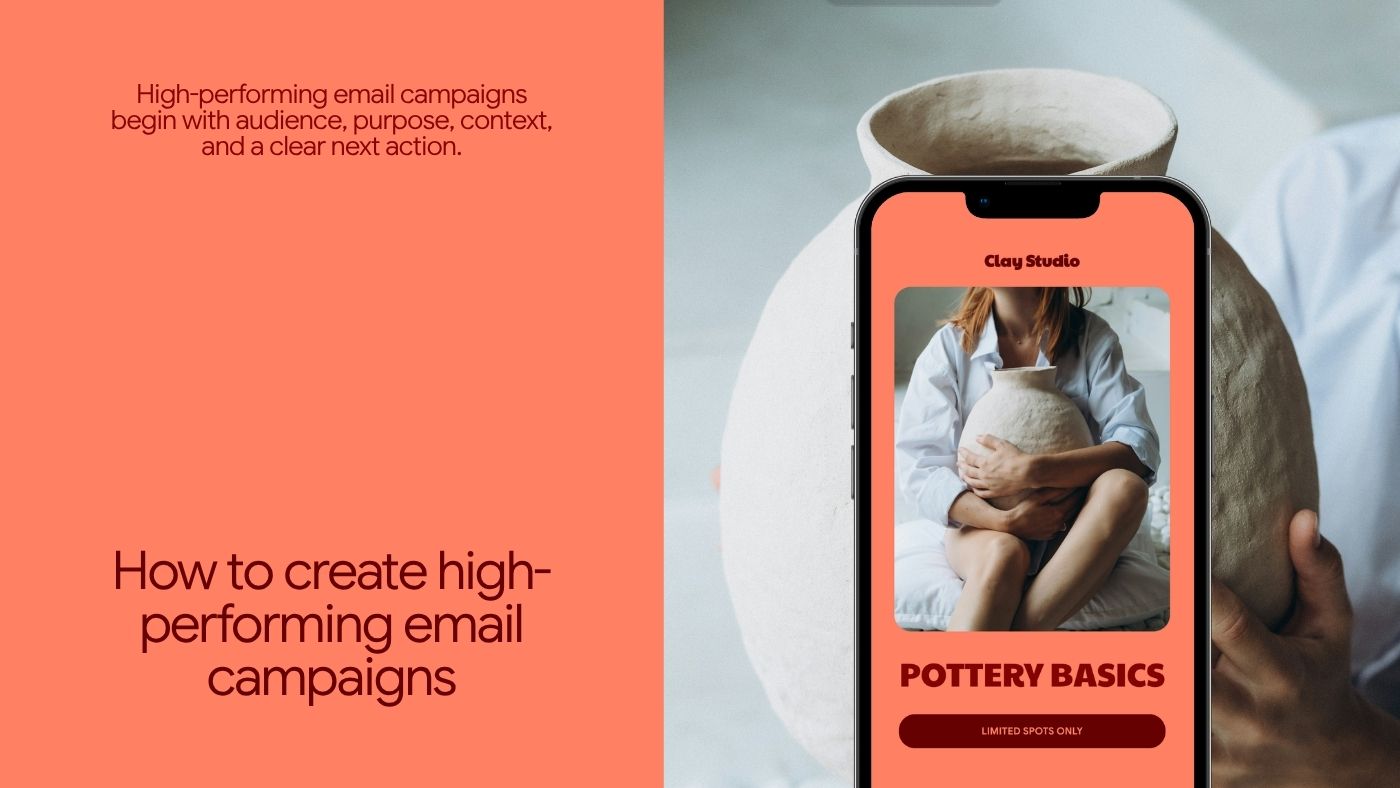
Email marketing remains effective in 2026 if lists are permission-based, messages are relevant, metrics focus on outcomes, and technical best practices are followed.

Email Marketing in 2026: Still Worth It — If You’re Doing It Right
Brandset TeamBrandset Team11 min de leitura

Most small businesses don’t have an email marketing problem. They have a lazy email marketing problem.

Email marketing in 2026 is still worth the investment when the list is permission-based, the sending domain is properly configured, and campaigns are tied to a clear business outcome. What has become less forgiving is using an old database as a broadcast list whenever sales slow down.

The channel still has something social media and paid acquisition cannot fully replace: a direct, portable relationship with people who chose to hear from your business. But access to an inbox does not create entitlement to attention.

That distinction explains why some companies report strong returns from email while others send campaign after campaign with little to show for it.

Email Marketing ROI Is Real, but the Average Isn’t Yours

The familiar argument for email starts with ROI.

Litmus reported in its 2025 State of Email research that 35% of companies generated between $10 and $36 for every $1 spent on email, while another 30% reported returns between $36 and $50. The research was based on nearly 500 marketing professionals worldwide. (Litmus)

That spread matters more than a single headline benchmark.

Adding an email platform to your stack does not suddenly create thirty-six dollars of revenue for every dollar charged to your card.

Email ROI should account for the actual cost of running the program:

Email ROI = (revenue attributed to email − email costs) ÷ email costs

Those costs can include the platform, creative work, copywriting, automation setup, list acquisition, testing, deliverability work, and the time someone spends planning and reviewing campaigns.

Imagine a small professional-services business spending $1,000 over a quarter across software and labor. Email generates $8,000 in attributable revenue.

That is a 7:1 return.

It sits well below the industry headline and could still be an excellent investment.

Use the Litmus benchmark as context. Your own benchmark is whether email produces enough revenue, qualified demand, retention, or customer activity to justify what your business spends maintaining it.

Why Email Still Has a Job That Other Channels Don’t

Search, social media, paid acquisition, and email solve different problems.

Search captures demand that already exists. Paid media buys reach. Social platforms help businesses get discovered and participate in conversations.

Email is particularly good at the part that comes after someone raises a hand.

A subscriber has given you an address and some form of permission to continue the relationship. You can use that relationship to educate, follow up, announce something relevant, recover intent, nurture a lead, or make an offer.

The audience is also portable.

If Instagram changes distribution tomorrow, years of followers still live inside Instagram. If an advertising account is suspended, access to paid reach can disappear overnight.

An email database can be exported and moved between providers. The underlying relationships do not have to be rebuilt from zero.

That does not mean you control delivery. Gmail, Yahoo, Outlook, and other mailbox providers still decide how messages are filtered. Subscribers can ignore you, leave the list, or report you.

You control customer data you collected legitimately.

You still have to earn the next email.

A Subscriber Is Useful Only When the Signup Means Something

An email address alone tells you very little.

Someone who requested a pricing guide yesterday is different from someone who entered a giveaway three years ago.

Someone who subscribed to a weekly industry newsletter has given you different permission from a customer who provided an address only to receive an order confirmation.

Treating those people as interchangeable wastes one of email’s biggest advantages: context.

The useful signal is simple: why did this person enter the database?

That should affect what happens next.

A recent newsletter subscriber might receive a welcome sequence. A customer should probably not receive a first-purchase offer. Someone who repeatedly clicks content about one service should not necessarily receive every campaign about another.

This level of relevance does not require sophisticated predictive models. It requires keeping enough information to avoid obvious mistakes.

First-Party Data Gets Better When You Stop Obsessing Over Opens

Email can generate useful first-party behavioral data.

Clicks, purchases, replies, form submissions, preference selections, trials, bookings, and other actions can tell you what someone actually did after receiving a message.

Open rate is less reliable.

Apple’s Mail Privacy Protection can download remote email content privately in the background when a message is received rather than when the person actively views it. That makes an “open” a weaker proxy for human attention than it once was. (Apple Support)

Open rate can remain on the dashboard. It just should not run the meeting.

A campaign with a high reported open rate and no clicks, purchases, replies, or other meaningful action may have produced very little business value.

Start with the job of the campaign, then choose the metric.

A newsletter may be judged on article visits and replies. A product launch might be judged on trials or purchases. A re-engagement campaign can succeed when people either confirm they want to stay or unsubscribe cleanly.

One universal benchmark cannot evaluate all three.

Email Got More Demanding Because Inbox Providers Got Less Tolerant of Bad Sending

Email itself did not suddenly become ineffective.

The infrastructure around it became stricter.

Since February 2024, Gmail has required all senders to personal Gmail accounts to meet baseline requirements including SPF or DKIM authentication, valid DNS records, TLS, proper message formatting, and reported spam rates below 0.3%. Senders reaching roughly 5,000 messages to personal Gmail accounts within 24 hours face additional requirements, including SPF and DKIM, DMARC, domain alignment, and one-click unsubscribe for applicable marketing messages. (Google Help)

Google recommends keeping user-reported spam rates below 0.1% and avoiding 0.3% or higher. It also increased enforcement against noncompliant traffic beginning in November 2025, including temporary and permanent rejections. (Google Help)

This changes the economics of sloppy email.

A poorly maintained list, unclear consent, weak authentication, or aggressive sending behavior can create problems faster when mailbox providers apply stricter standards.

That is useful pressure.

Businesses that treat an address as permission to send forever are finding it harder to hide behind a large list.

List Size Is Still One of the Most Misleading Email Metrics

Ten thousand subscribers look better in a presentation than 1,500.

That does not make the larger list more valuable.

Imagine the 10,000-person database includes thousands of contacts collected years ago, people who never clearly opted into marketing, dead addresses, and subscribers who no longer remember the business.

Now compare it with 1,500 recent subscribers and customers who know the sender and regularly take useful actions.

The second list may generate more revenue with fewer sends while creating less deliverability risk.

The mistake is swinging too far in the opposite direction and aggressively deleting everyone who does not click for a fixed number of days.

Buying cycles vary.

A weekly media newsletter and a seasonal tax consultancy should not define inactivity the same way. Some people read without clicking. Privacy features also make open data noisy.

Know who is on the list instead.

Useful distinctions might include:

  • recent subscribers;

  • active customers;

  • active non-customers;

  • subscribers with a known topic or product interest;

  • persistently inactive contacts.

That is enough structure for many small businesses.

You do not need 47 micro-segments. You need enough information to stop treating obviously different people as the same audience.

A Small Email Program Can Beat an Elaborate One

Email marketing software tends to encourage complexity because complexity demonstrates features.

That does not mean your business needs it.

A useful program for a small business might consist of:

  1. a clear signup experience;

  2. a short welcome sequence;

  3. a regular newsletter or campaign;

  4. a few behavior-based follow-ups;

  5. basic list hygiene;

  6. measurement tied to actual outcomes.

A four-email welcome sequence someone maintains is more valuable than a 26-step automation nobody understands six months after it was built.

Consider the first few emails after signup.

The subscriber just gave you attention. Use it.

Deliver what was promised first. Answer the question that usually comes next. Give enough context for the subscriber to understand the business. Then offer one sensible next action.

Company history can wait.

Segmentation Is Valuable When It Changes What You Send

A segment has no inherent value.

It becomes useful when knowing something about the recipient changes the message.

Suppose a SaaS company has three people in its database:

  • one downloaded an introductory guide;

  • one started a trial yesterday;

  • one has been a paying customer for 18 months.

Putting all three into the same promotional campaign ignores information the business already has.

Behavior often gives you cleaner signals than demographics alone.

A subscriber who repeatedly clicks content about local SEO has shown interest in local SEO. A customer who has purchased three times has demonstrated something more useful than whatever job title sits in the CRM.

Use that information.

Segmentation should prevent mismatches such as sending:

  • a first-purchase discount to an existing repeat customer;

  • beginner education to someone consuming advanced material;

  • a promotion for something the customer just bought;

  • every product launch to subscribers who have never expressed interest in the category.

If a segment does not change content, timing, or the next action, question whether you need it.

Email Marketing Performance Starts After the Open

Campaign Monitor’s published benchmark puts average email click-through rate around 2.6%, while noting that performance and calculation methods can vary. (Campaign Monitor)

Use that as orientation, not a grade.

A B2B consultancy sending a high-value report to 400 carefully selected subscribers should not evaluate itself the same way as an ecommerce store sending a promotion to 80,000 customers.

Before sending, decide what the email is meant to do.

Then measure that.

Useful metrics can include:

  • click-through rate;

  • conversion rate;

  • revenue per recipient;

  • qualified leads;

  • trials or bookings;

  • replies;

  • unsubscribe rate;

  • spam complaint rate;

  • performance by audience segment.

The metric should follow the purpose of the email.

Open rate can stay on the report.

It should not run the meeting.

When Email Marketing Is Worth the Budget

Email earns its place when the business can answer a few basic questions.

Where did the subscribers come from?

What did they agree to receive?

Why is this particular campaign being sent?

Why should this particular audience receive it?

What should happen after someone reads it?

How will the business know whether that happened?

If nobody can answer those questions, adding another automation is unlikely to solve the problem.

Healthy email programs tend to have less glamorous characteristics:

The list is permission-based. The domain is authenticated. Sending is reasonably consistent. Campaigns have a specific purpose. Audience selection reflects what the business already knows. Someone reviews what happens after the send.

The warning signs are equally plain.

The business disappears for months and returns whenever revenue is down. Everyone receives every promotion. Nobody knows where half the contacts came from. The list has not been reviewed in years. Open rate is presented as proof of success while sales, leads, and replies remain disconnected from the report.

That is occasional broadcasting.

It happens to use email.

Is Email Marketing Still Effective in 2026?

Yes.

The useful version of email marketing has become more disciplined.

The channel works because it allows repeated communication with people who have already expressed some degree of interest. It performs poorly when businesses confuse possession of an address with permission to demand attention indefinitely.

Better authentication rules and stricter filtering make bad email less sustainable.

The businesses most likely to keep getting value from email are the ones that know why people subscribed, maintain the technical basics, send with a reason, and connect subscriber behavior to the next message.

There is no need to romanticize the channel.

If email is generating qualified demand, customer activity, retention, or attributable revenue at a reasonable cost, keep investing.

If it is producing campaigns nobody can connect to a business outcome, stop adding tactics and diagnose the program.

Audit Your Last Five Emails Before Building Anything New

Open the last five campaigns your business sent.

For each one, answer four questions:

  1. Why did this audience receive it?

  2. What did the recipient get from opening it?

  3. What action was the email designed to produce?

  4. Can you tell whether that action happened?

If the answers become vague after the first question, subject-line testing is probably not the first thing you need.

Fix the purpose.

Then fix the audience.

Then look at the creative.

For small teams, the harder part is often keeping that operating discipline when forms, subscriber data, CRM records, campaigns, automations, and brand assets live in separate tools. Brandset brings those parts of the workflow into one organized workspace, so the context collected when someone enters your audience can stay connected to the marketing that follows.

Start your 7-day free trial →

FAQ - Perguntas frequentes