
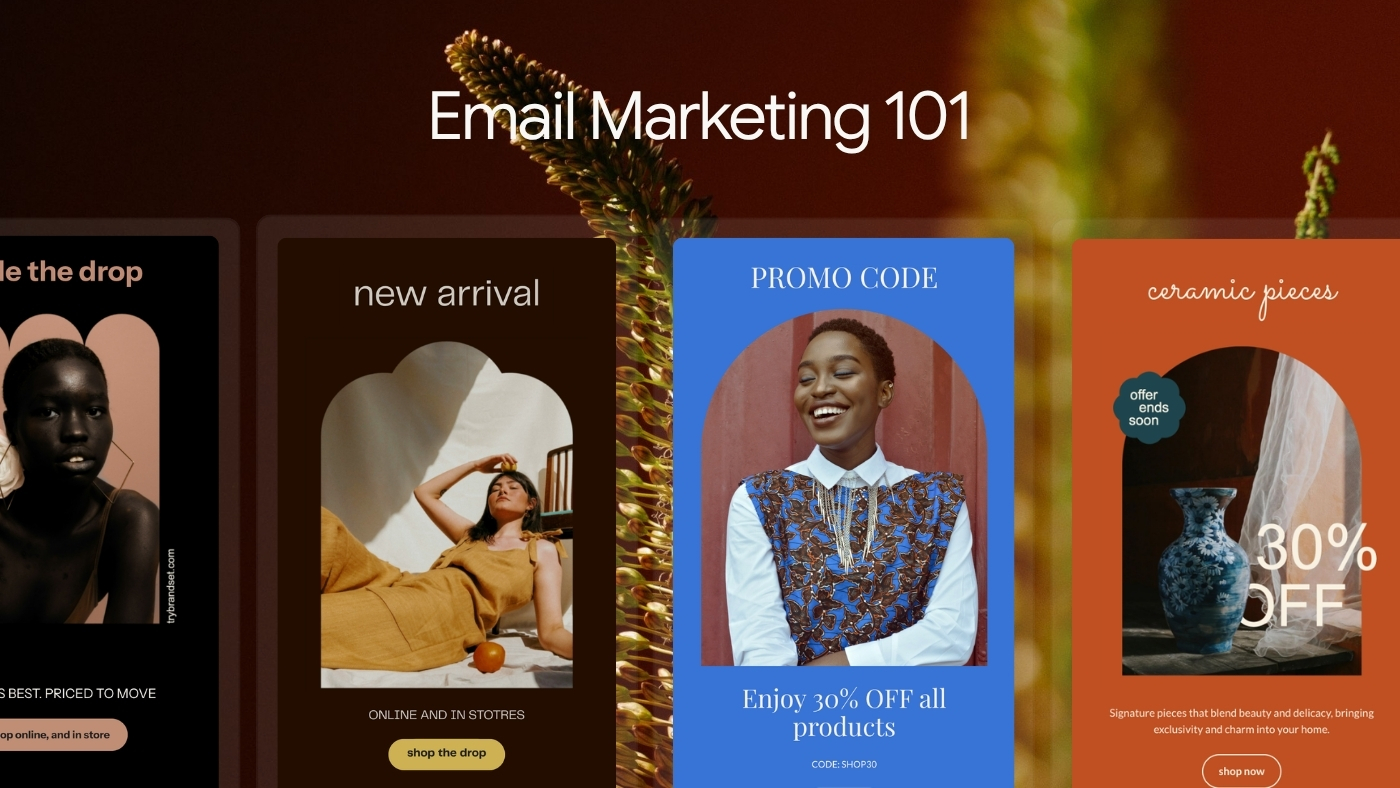
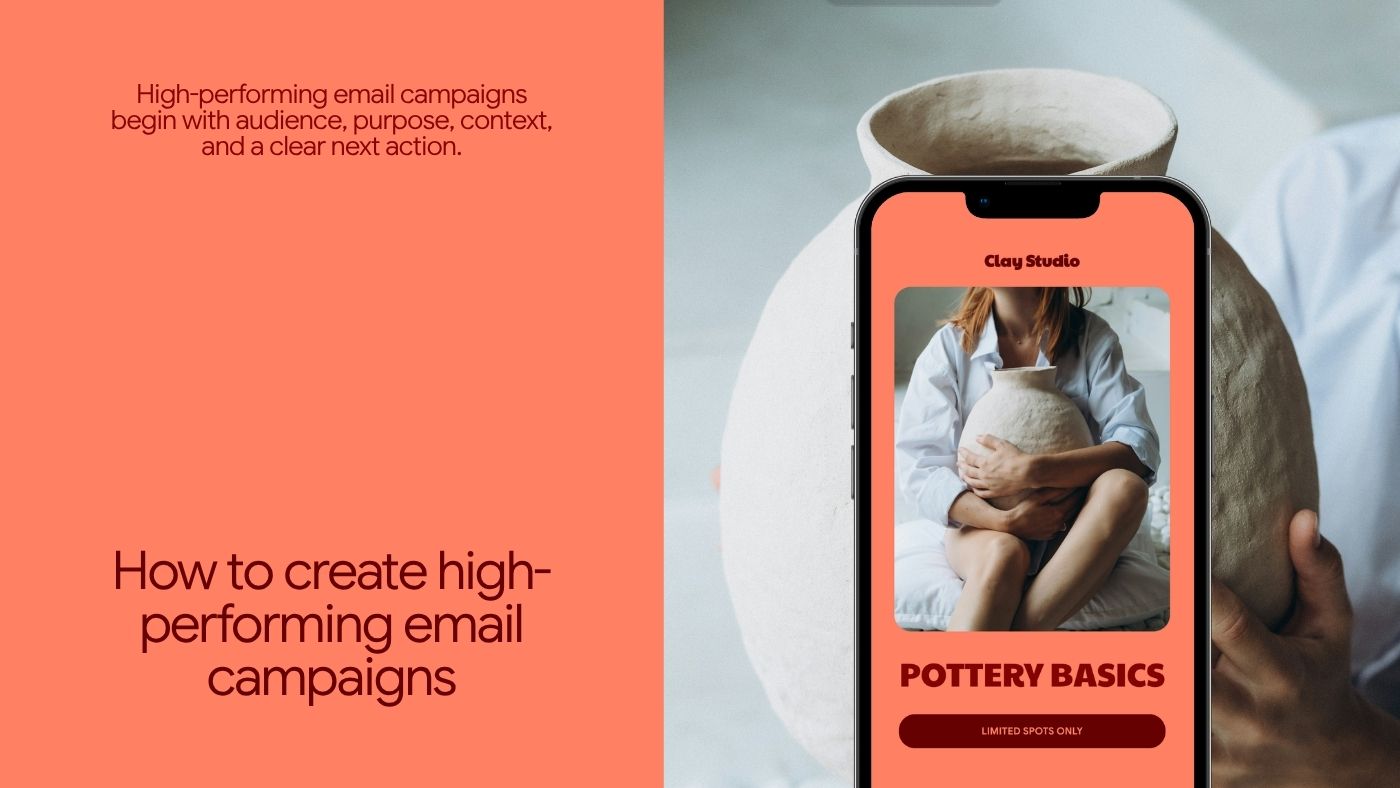

Email Marketing 101: What It Is, Why It Works, and How to Use It Well

This guide explains email marketing basics: focus on permission-based lists, clear goals, relevant content, proper authentication, and measuring results for long-term business value.

Email Marketing 101: What It Is, Why It Works, and How to Use It Well
Brandset TeamBrandset Team19 min de leitura

Email marketing is easy to start and surprisingly easy to misunderstand.

A business adds a signup form, collects a few hundred addresses, sends occasional promotions, watches opens and clicks, and eventually decides whether email is "working." A useful email program is more deliberate.

Email marketing is permission-based communication with people who have chosen to hear from a business, designed to build an ongoing relationship and support specific customer or business outcomes. That permission matters. Google explicitly recommends sending marketing email only to people who have opted in and making it easy for recipients to unsubscribe. Harvard Business Review has similarly argued that clear opt-in and privacy practices are central to maintaining trust as marketers use customer data to personalize communication.

In short:

  • Permission is the product, not a compliance checkbox: A list built on genuine opt-in behaves differently than one built any other way — higher engagement, lower complaints, better long-term deliverability.

  • Campaigns and automations solve different jobs: One is a message you choose to send now. The other runs on its own once triggered. Most programs need both.

  • Open rate is no longer a reliable signal: Apple's Mail Privacy Protection can register an "open" without the recipient ever seeing the email. Clicks and conversions tell you more.

  • Authentication is now baseline infrastructure: SPF, DKIM, and DMARC aren't optional technical trivia anymore — mailbox providers increasingly require them, and they protect the domain either way.

For a small business, email remains particularly useful because the relationship is direct. You don't need a social feed to decide whether every subscriber sees a message. Inbox providers still control delivery and filtering, but the subscriber relationship itself can continue across campaigns and even across email-service providers when consent and applicable rules are respected.

That distinction is becoming more valuable as businesses become less comfortable depending entirely on third-party distribution. Business Insider documented a similar shift among newer media companies in 2025, with publishers deliberately building direct-reader relationships through newsletters, subscriptions, communities, and events as search and social referral traffic became less predictable.

The mechanics are straightforward. Building a good email program takes more thought.

A subject line and opening comparison, side by side:

Weak: Subject: "Newsletter #47." Opening: "Hi there! Hope you're having a great week. We wanted to check in and share some updates from around the company."

Strong: Subject: "Why your welcome email is your highest-leverage send." Opening: "Most businesses spend more time on their homepage than on the one email nearly every new subscriber actually opens. Here's the math on why that's backwards."

The weak version tells the reader nothing about what's inside and asks them to invest attention before earning it. The strong version states a specific claim in the subject line and delivers on it in the first sentence — the reader knows within five seconds whether this email is worth their next thirty.

A simple two-email welcome sequence:

Email 1 (sent immediately): Delivers exactly what was promised at signup — the guide, the discount code, the resource — with one sentence of context about what to expect next. Nothing else. No cross-sell, no "by the way," no second ask.

Email 2 (sent two or three days later): One useful, specific piece of content related to why they signed up in the first place, with a soft invitation to reply or explore further. Still no hard pitch — the goal is demonstrating that subscribing was worth it before asking for anything else.

That's a complete, functional welcome sequence. Most businesses either skip it entirely or try to cram five asks into the first email. Two focused emails that deliver on the promise and then prove the relationship is worth continuing outperform both.

Why Email Marketing Still Matters

Email is one of the oldest major digital marketing channels, which occasionally makes it sound less interesting than whatever appeared last month. Businesses continue investing in it anyway.

A January 2025 survey commissioned by Morning Brew Inc. and reported by its trade publication Marketing Brew found that 51% of marketing-industry decision-makers considered email marketing an investment priority for the year. That's industry-reported survey data rather than a government or peer-reviewed source, and the sample and methodology weren't independently audited — treat it as a directional signal about industry sentiment, not a precise national figure.

There's also a widely cited economic case. Forbes Advisor reports the Litmus benchmark of approximately $36 in email marketing return for every $1 spent. That figure is useful as industry context, not as a promise that every company should expect a 3,600% return. Actual ROI depends on acquisition costs, margins, audience quality, attribution, program maturity, industry, frequency, and how the business calculates revenue from email.

The more durable advantage is structural. Someone who joins your email list has taken a deliberate step toward the business. They may not be ready to buy, but they've given you a way to continue the relationship. That creates possibilities a single website visit doesn't — teaching, introducing a product, answering objections, sharing something useful, announcing an update, inviting someone back, following up after a meaningful event, staying recognizable while a potential customer continues evaluating their options.

Over time, email becomes less about individual sends and more about continuity.

Permission Is the Foundation

A large contact database is not automatically an email audience. The useful distinction is permission.

Someone who subscribes to a newsletter, requests a guide, joins a waitlist, signs up for a product, or explicitly asks to receive marketing communication has created a relationship the business can continue according to the expectation established at signup. Buying a list doesn't create that relationship. Scraping addresses doesn't create it. Adding people to promotional campaigns simply because their email address happens to be available doesn't create it.

Google's current sender guidance explicitly recommends making sure recipients opt in, confirming addresses before subscription where appropriate, and making unsubscribe easy. For higher-volume senders, Gmail also requires one-click unsubscribe for marketing and subscribed messages.

Trust becomes especially important once personalization enters the picture. Harvard Business Review has highlighted the tension consumers experience between wanting more relevant experiences and being concerned about how companies collect and use their data. Its practical recommendation begins with clear privacy and opt-in policies.

Permission therefore does more than protect deliverability. It establishes the terms of the relationship. If your signup says "Get one practical email every Friday about running a one-person marketing operation," the subscriber knows what they're asking for. If the form simply says "Subscribe," the business has created more ambiguity than necessary. Good email marketing starts before the first email is sent.

Campaigns and Automations Solve Different Jobs

Most email programs contain two broad types of communication.

A campaign is a message a business decides to send to an audience at a particular time — a newsletter, product announcement, new article, event invitation, promotion, company update, seasonal message, or educational email. The business chooses the message, audience, and timing. Campaigns are useful when something deserves to be communicated now.

Automated emails are connected to predefined events, conditions, or stages in a customer relationship rather than requiring someone to manually initiate every send. A simple example is a welcome series after subscription. Other businesses might create processes around onboarding, customer education, re-engagement, or other lifecycle moments, depending on what their email and automation systems support.

The value is consistency. A new subscriber shouldn't receive an excellent introduction only when somebody on the marketing team remembers to send one. Automation can make repeatable communication easier to maintain. It should still be designed deliberately — automating an irrelevant email simply delivers irrelevant communication more efficiently.

Start With the Subscriber's Context

A new subscriber and a long-term customer should rarely be treated as though they have the same relationship with the business. The same applies to someone who downloaded an introductory guide, requested a quote, attended an event, joined a waitlist, purchased yesterday, or has been a customer for two years.

Email becomes more useful when those differences affect the communication. This is the basic idea behind segmentation — dividing the audience according to information that meaningfully changes what they should receive, whether that's lifecycle stage, product interest, customer status, geography, signup source, previous purchase, declared preferences, relevant engagement, or account characteristics.

Harvard Business Review described personalization as a baseline customer expectation in 2026 while emphasizing that increasingly personal experiences require more thoughtful handling of disclosure, context, and trust.

For email, the practical lesson is simple. Personalization should make the message more relevant, not merely make it look personalized. Putting someone's first name in a subject line is personalization at its most superficial. Knowing that an existing customer shouldn't receive a campaign explaining why they should become a customer is considerably more useful.

Tags Help Preserve Useful Context

Tags are one way to record information that can later support segmentation — a contact might be tagged as webinar attendee, guide download, interested in a specific product, customer, agency, or event lead.

The tag itself doesn't make email relevant. What matters is whether the information changes a decision. Suppose someone downloaded a guide about email authentication. That tells you something about the topic that brought them into the relationship. It doesn't mean they should immediately receive a hard sales sequence. Context helps you decide what communication makes sense next.

Good segmentation is less about creating hundreds of micro-audiences and more about recognizing differences that genuinely affect relevance.

Your Email List Is a Relationship, Not Just a Number

List size is easy to understand. Relationship quality is harder to put on a dashboard.

A list with 20,000 addresses may look impressive. If a large share no longer wants the communication, rarely engages, or entered through unclear acquisition practices, its size tells you very little about its business value. A smaller list can be extremely useful when it contains people who deliberately chose the relationship and continue to find the communication relevant.

This idea appears outside conventional brand marketing as well. Business Insider's reporting on newer media companies found that several were building around direct-reader relationships rather than maximizing dependence on Google or social referral traffic. Some began as highly focused newsletters and expanded into broader businesses around subscriptions, events, podcasts, and other products. Marketing Brew has documented a similar resurgence in newsletter investment, particularly as marketers look for more direct audience relationships in an environment where social platforms are crowded and algorithm-dependent.

For a small business, the equivalent doesn't require becoming a media company. It means treating the email address as the beginning of a relationship rather than a unit added to a database.

Measure What the Email Was Supposed to Accomplish

Email platforms can produce a long list of metrics. Not all deserve equal attention. Start with the purpose of the message. If the email exists to get someone to read an article, clicks matter. If it exists to generate consultations, booked consultations matter. If it exists to drive purchases, revenue and conversion matter.

Forbes Advisor's email metrics guide defines the common measures, including open rate, click-through rate, conversion rate, bounce rate, list growth, unsubscribe rate, spam complaints, and overall ROI. Understanding what they measure is more useful than chasing a universal benchmark.

Delivery and bounces

A bounce means a message couldn't be delivered to the recipient address. A sudden increase can indicate problems with the underlying list, addresses, or sending process. There's no single bounce-rate threshold that should be treated as healthy for every business — watch your own trends and investigate changes.

Open rate

Open rate once looked like the simplest engagement metric. Apple Mail Privacy Protection made it less reliable. Apple explains that when Protect Mail Activity is enabled, Mail downloads remote content in the background when a message is received regardless of whether the recipient interacts with the email. Traditional open tracking often relies on that remote content being loaded, which means an "open" can no longer always be interpreted as proof someone read your email. Open rate can still provide directional information over time, but it shouldn't be treated as precise evidence of human attention.

Click-through rate

A click generally represents a more deliberate interaction than an open, which makes it useful for messages designed to move readers somewhere else. If a campaign invites people to read an article, explore a product, register for an event, or visit a landing page, clicks tell you whether recipients acted on that invitation. Clicks still need context — a high click rate doesn't automatically mean the email created business value.

Conversion rate

Conversion connects the email with the action the business actually wanted — purchase, signup, trial, booking, application, download. The definition depends on the campaign. This is where email measurement begins to connect with business measurement.

Unsubscribes

An unsubscribe is not automatically a failure. People change jobs. Interests change. The relationship stops being relevant. An easy unsubscribe process is part of responsible email marketing — for high-volume marketing senders, Gmail now explicitly requires one-click unsubscribe, and Google says making it easy to opt out can help reduce spam complaints and improve delivery. Watch for unusual changes rather than treating one universal unsubscribe percentage as a law.

Spam complaints

Spam complaints deserve attention because mailbox providers use recipient feedback when deciding how to treat future mail. Google currently requires senders to personal Gmail accounts to keep user-reported spam rates below 0.3%, and its guidance recommends sending only to people who want the messages and making unsubscribe easy. This is one of the places where permission, relevance, and deliverability meet directly.

Email Authentication Is Part of Email Marketing Now

A beginner's email-marketing guide can no longer treat authentication as an obscure technical detail. Mailbox providers have made it part of the baseline.

Google currently requires all senders to personal Gmail accounts to use SPF or DKIM authentication, along with requirements such as TLS and valid DNS configuration. Senders exceeding Gmail's bulk threshold must use SPF and DKIM, publish DMARC, meet alignment requirements, and support one-click unsubscribe for marketing and subscribed messages.

You don't need to become an email-infrastructure engineer. You should know that authentication exists and make sure your sending domain is configured correctly. Three terms matter: SPF helps identify systems authorized to send mail for a domain used in the delivery path. DKIM adds a cryptographic signature that receiving systems can verify. DMARC connects authentication with the visible From domain through alignment and lets a domain owner publish a policy for handling messages that fail those checks.

Authentication doesn't guarantee inbox placement. It establishes part of the technical trust required to send legitimate email reliably.

Design for Small Screens Without Designing Only for Them

Email is read across phones, tablets, laptops, desktop clients, browser-based inboxes, and many screen sizes. Forbes Advisor's current statistics compilation shows mobile continuing to represent a substantial share of email consumption, even though the exact percentage varies by dataset and methodology.

The safe design principle is straightforward: your email should remain easy to understand and use on a narrow screen. That usually means readable type, enough spacing, buttons or links that are easy to tap, images that scale properly, short enough lines, hierarchy that survives responsive layouts, and important content that doesn't depend on a wide desktop composition.

Mobile-friendly doesn't mean reducing every email to a single-column promotional template. It means testing what subscribers actually receive rather than assuming the desktop editor represents the final experience.

Put the Important Information Early

An email has to earn continued attention. Don't make subscribers read through a generic introduction before discovering why the message exists.

Compare "We hope you're having a wonderful week. Here at Company X, we've been working hard behind the scenes and we're incredibly excited to share some important news with our community" with "We added automatic DMARC checks to the domain setup flow this week." The second email starts with information.

That doesn't mean every email should be aggressively short. A thoughtful newsletter can be long. An educational email can develop an argument. A founder letter can tell a story. The beginning still needs to give readers a reason to continue.

Give Each Email a Primary Job

Some emails genuinely require several links. A newsletter may contain multiple articles. A customer update may link to documentation, account settings, and support. A weekly digest may contain several destinations by design.

For a focused campaign, though, it helps to know the primary action. What should someone do after reading — read the article, start a trial, see the collection, register, reply, book? Choose that before writing the email. Secondary links can still exist. The reader shouldn't need to figure out which of six equally prominent actions the email was actually trying to encourage.

Frequency Should Follow the Promise

There's no universally correct email cadence. Daily can work. Weekly can work. Monthly can work. Irregular communication can work in certain contexts. The right frequency is the one your audience has reason to expect and your business can sustain with useful content.

A local restaurant announcing weekly specials has a different communication rhythm from a consulting firm publishing a monthly analysis. The signup experience should help set the expectation. Then keep it reasonably consistent. The problem is rarely that a business failed to discover the magic industry-wide sending frequency. Problems appear when subscribers expected one relationship and received another.

Build a Small Program Before a Complicated One

A business starting email marketing doesn't need dozens of segments and sophisticated lifecycle architecture on day one. Start with a system you can actually maintain.

Begin with one clear signup path that explains what people receive — give them a reason to subscribe beyond "join our newsletter." The first message should deliver whatever was promised and introduce enough context for the subscriber to understand who's emailing and why. From there, establish a sending rhythm the business can maintain without filling the inbox simply because the calendar says it's time, and separate audiences only when the relationship genuinely differs — new subscribers and existing customers being the obvious starting split.

On the measurement side, track the outcome that actually matters for each send; clicks and conversions are usually more useful than obsessing over opens, and revenue matters when the goal is revenue. Underneath all of it, treat SPF, DKIM, and DMARC as infrastructure rather than optional optimization, and make leaving easy — an unsubscribe shouldn't feel like punishment for having subscribed in the first place. Google's current bulk-sender requirements make one-click unsubscribe a technical requirement for higher-volume promotional email, but the customer-experience principle applies to smaller lists too.

That's already a serious email program. Complexity can come later, once the business has evidence it actually needs it.

Personalization Should Earn the Data It Uses

AI is making increasingly granular personalization possible. That doesn't automatically make more personalization better.

Harvard Business Review's 2026 work on personalization describes a market in which tailored experiences have become expected while increasingly intimate use of customer information raises new questions about disclosure and trust. Email marketers should pay attention to that tension. Using someone's declared interest to send relevant content is easy to understand. Using obscure behavioral data to imply that the business knows more about someone than they expected can feel very different.

A good question before using a piece of customer information: would the subscriber reasonably understand why we know this and why we're using it here? Relevance works best when it doesn't feel invasive.

Email Gives You a Direct Relationship, Not Guaranteed Attention

Calling email an "owned channel" is useful shorthand, but it can create the wrong impression. You own your business relationship and subscriber database subject to consent, contracts, and applicable law. You do not own the inbox. Gmail, Outlook, Yahoo, Apple Mail, corporate filters, and other systems still influence whether and how a message reaches a recipient. Subscribers also control whether they pay attention.

Email therefore gives you something more precise than guaranteed access: a direct, permission-based path back to people who chose a relationship with your business. That is valuable. Marketing Brew's reporting on newsletter investment and Business Insider's coverage of direct-reader media businesses both show why marketers and publishers continue investing in that kind of direct connection even as distribution channels change around them.

The channel works best when businesses respect what made that relationship possible in the first place.

What a Good Email Program Looks Like Over Time

A mature email program doesn't necessarily send more email. It becomes more intentional.

People know why they're subscribed. The business knows why it's sending. Different customer relationships are treated differently when it matters. Authentication is configured. Unsubscribing is simple. Campaigns have a purpose. Automations support repeatable parts of the customer journey. Metrics are connected to outcomes rather than collected for decoration. Open rates are interpreted with appropriate skepticism because of privacy protections such as Apple's Mail Privacy Protection. Customer data is used carefully enough that relevance doesn't become surveillance. And the list grows because people continue finding a reason to join it.

That's a much more useful definition of email success than hitting an arbitrary industry benchmark.

Where Brandset Fits

For a small business, the difficult part of email marketing is often everything surrounding the email. The signup form lives somewhere. Contacts live somewhere else. Campaigns have their own editor. Brand guidelines are stored in another document. Website activity belongs to another system. Then someone has to keep the entire experience coherent.

Brandset brings more of that work into the same marketing environment. Forms, CRM, Email Marketing, Brand Center, Website Builder, Landing Pages, content creation, and a growing automation layer sit closer to the same brand and customer context. The Brand Center stores information such as voice, positioning, audience context, products, services, colors, and typography so each campaign doesn't need to recreate the brand from an empty prompt or template.

That doesn't remove the decisions that make email marketing good. You still need permission, something useful to say, a reason to send, an audience for whom the message is relevant, and a clear idea of what should happen next. Brandset's role is reducing the operational work around those decisions so a small team can maintain a serious email program without turning email operations into another full-time job.

Start your 7-day free trial →

FAQ - Perguntas frequentes